
Why use a Vacuum Conveyor?
Vacuum conveying provides an enclosed method for transferring powders and dry bulk materials between process steps. As a form of dilute-phase pneumatic conveying, it is particularly useful when equipment layout, available floor space, and dust control make other conveying methods difficult to accommodate.
With minimal moving parts in the material path and conveying lines that can be routed around existing equipment, vacuum conveyors offer a flexible way to connect material sources with downstream processes.

What Sets Hapman’s MiniVac Conveyor Apart?
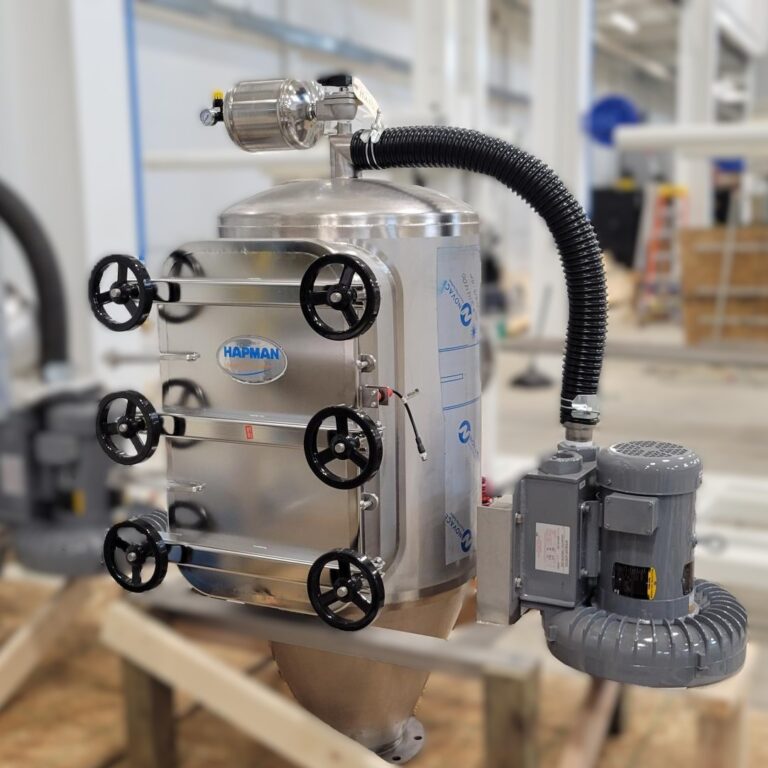
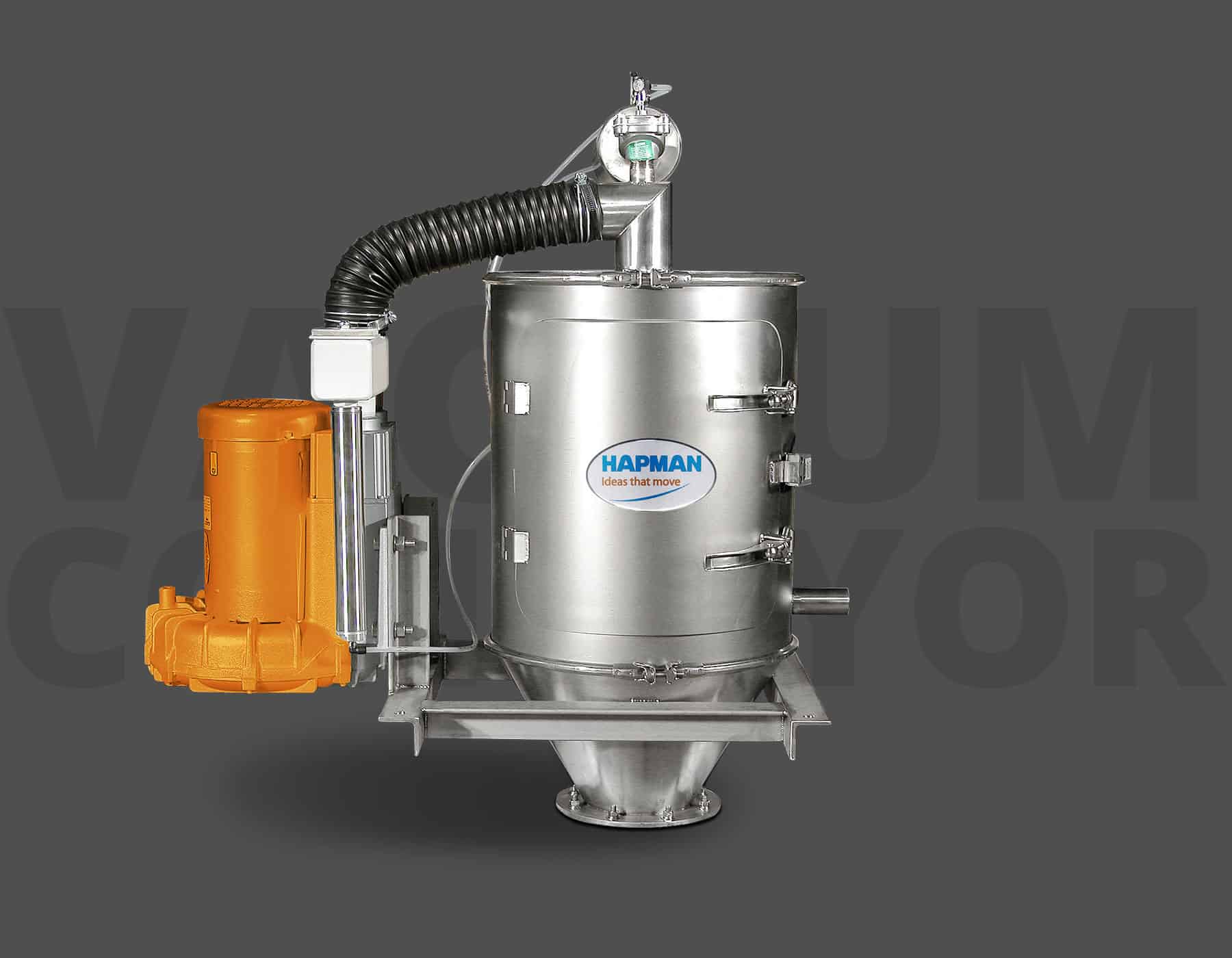
Hapman MiniVac conveyors use a regenerative blower to generate conveying vacuum without plant air or a separate compressor. The compact design supports flexible installation, while tool-less side access simplifies filter removal and changeover. Reverse-pulse cleaning helps maintain filter performance during operation.
Integrate the MiniVac with other bulk material equipment from Hapman like the Bulk Bag Unloader, Bag Dump Stations, or Bulk Bag Filler for a complete conveying system.
The Hapman Performantee®
Our Performantee is a 100% operational guarantee that you will be fully satisfied with the performance of our equipment, and that it will achieve the specific results for which it was designed and manufactured. If not, we will revise or repair it to deliver the results we promised.
Product Details
Features
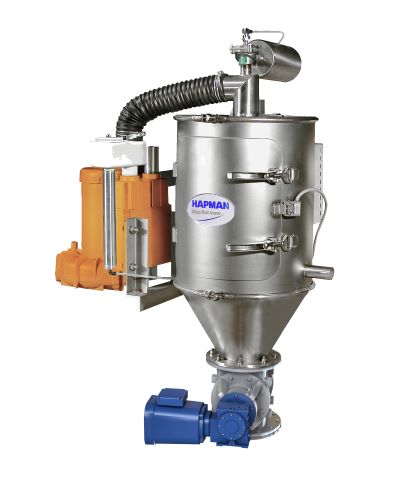
Each component is built for clean, dependable conveying, with quick access for cleaning and maintenance.
Receiver
Available in stainless steel or carbon steel.
Blower
Regenerative blower generates the conveying vacuum without plant air or a separate compressor.
Filters
MERV 16 cartridges with side access and tool-less removal.
Cleaning
Reverse pulse clears the filters to maintain performance.
Performance Specifications
Every MiniVac is configured around your material and process. Use the ranges below as a starting point, then talk with our team to size the right system for your application.
Volume
Up to 4 CFM
Distance
Up to 100 ft
Path
Up to 4 elbows
Density
10–80 lb/ft³
Models

Inlet Options
Choose the inlet that matches how material reaches the conveyor, from manual pickup out of containers to metered feed from upstream equipment.
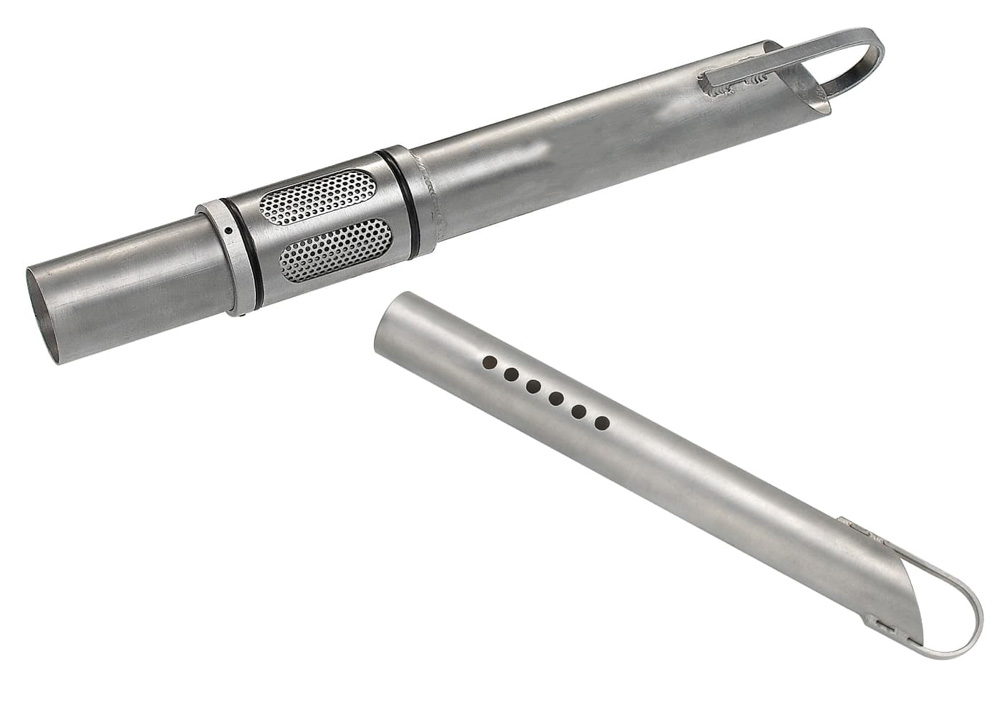
Pickup Wand
Draws material directly from the source while introducing conveying air from above to maintain the proper air-to-material ratio.
Best For
Drums, boxes, and other containers
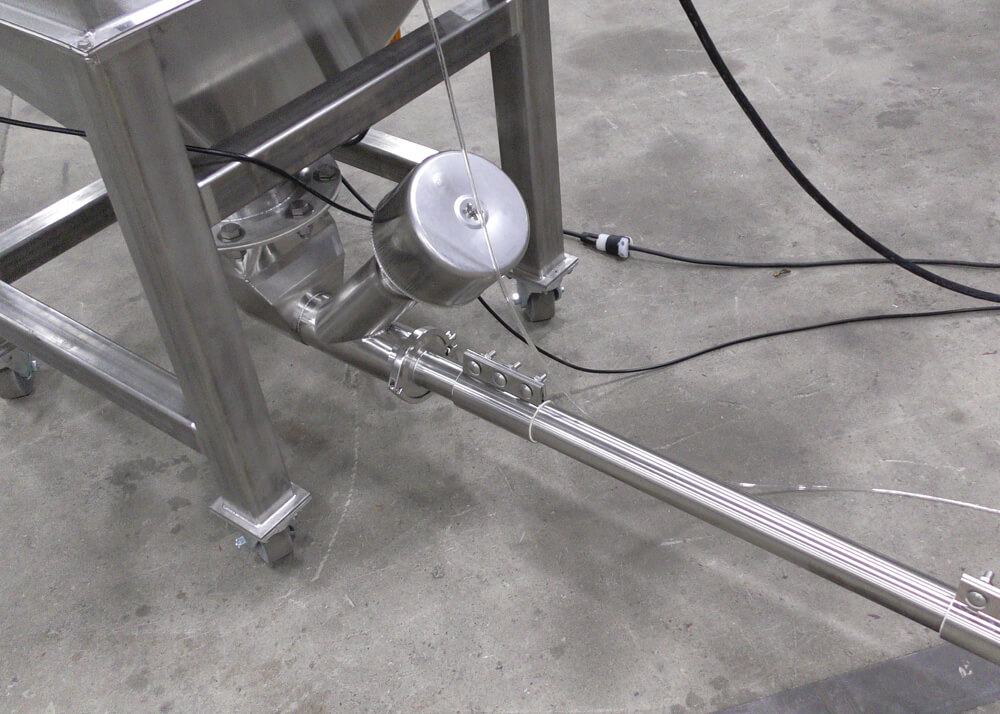
Flooded Well
Allows material to enter from a hopper or surge bin while introducing conveying air to help prevent choke feeding and line plugging.
Best For
Hoppers and small surge bins
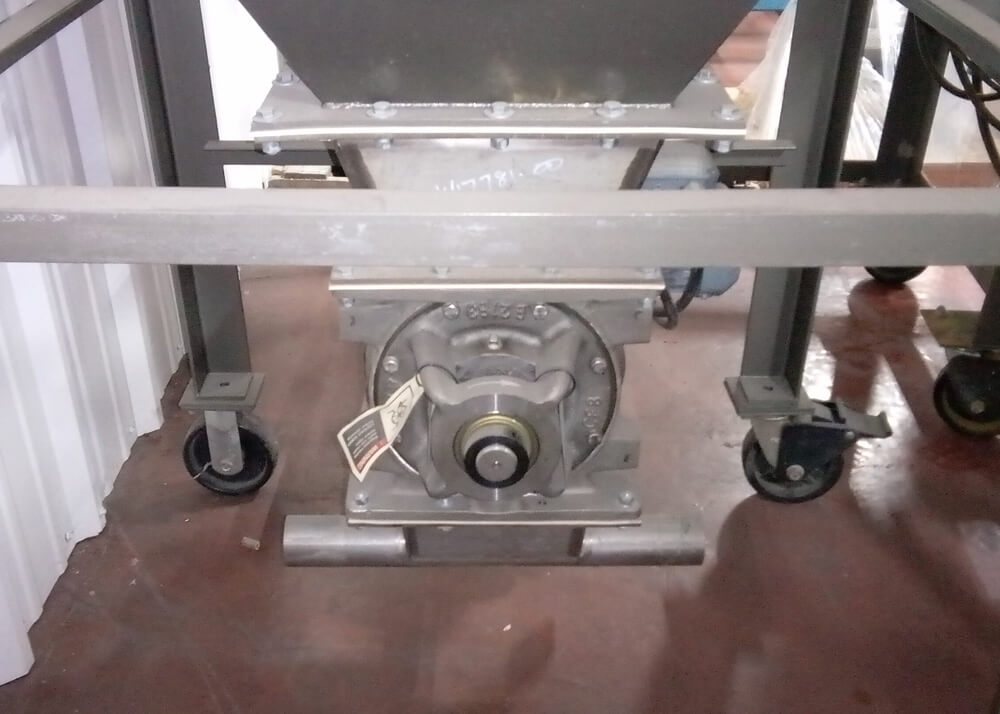
Blo-Through
Introduces material into the conveying line from equipment such as a rotary valve or feeder.
Best For
Metered material feed
Discharge Options
Choose how material leaves the receiver based on your flow, conveying rate, and available space.
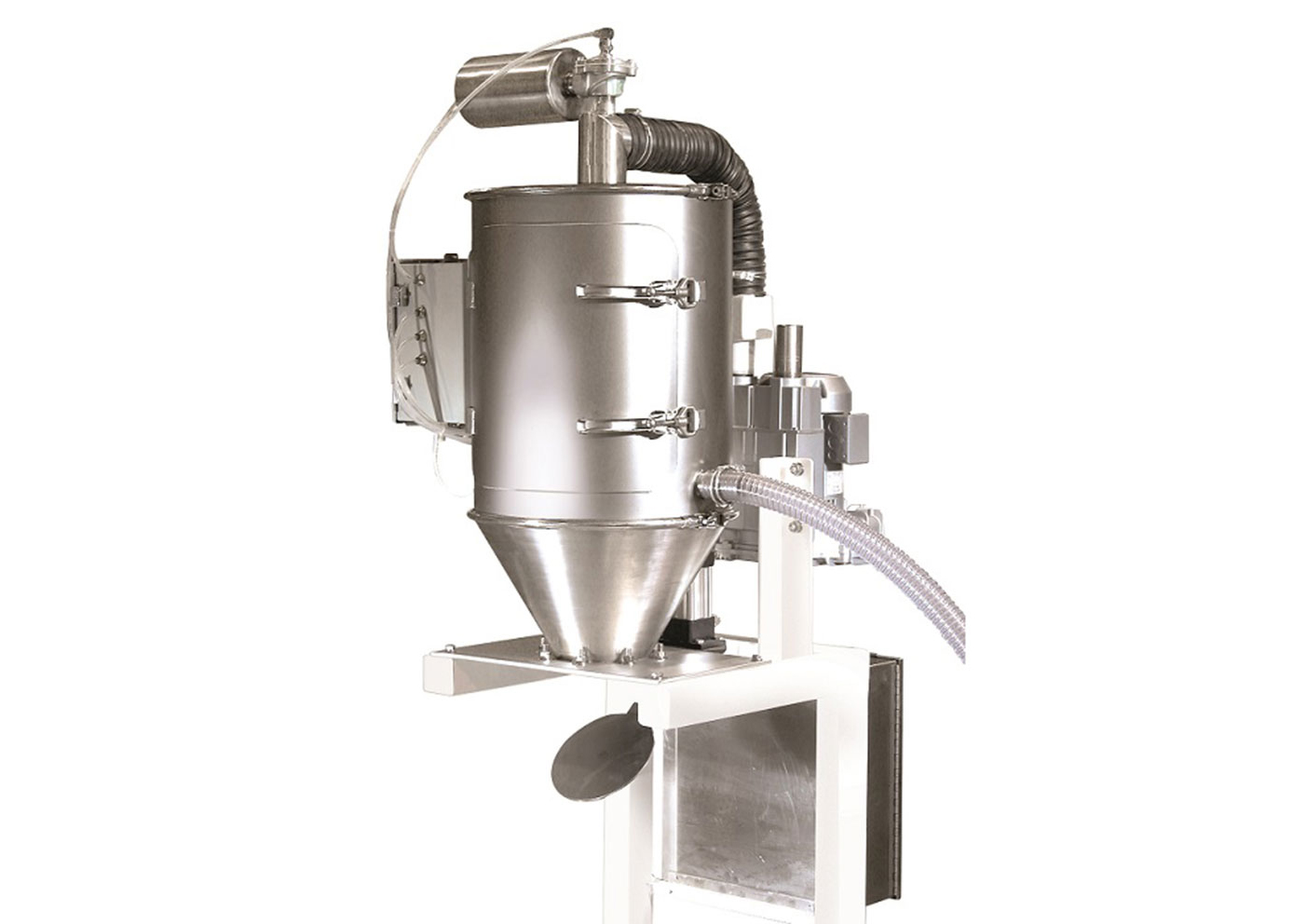
Dump Gate
Collects material in the receiver, then opens to discharge the batch. Adjustable timing controls the fill-and-discharge cycle.
Best For
Intermittent material transfer
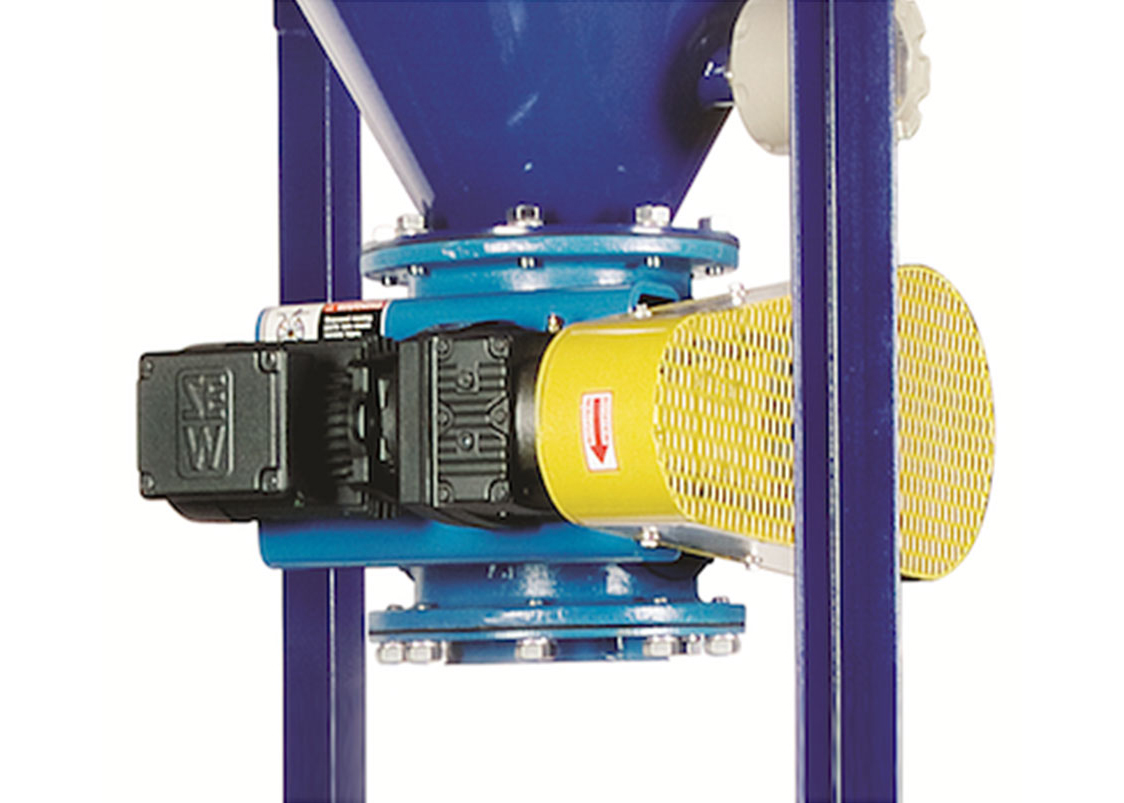
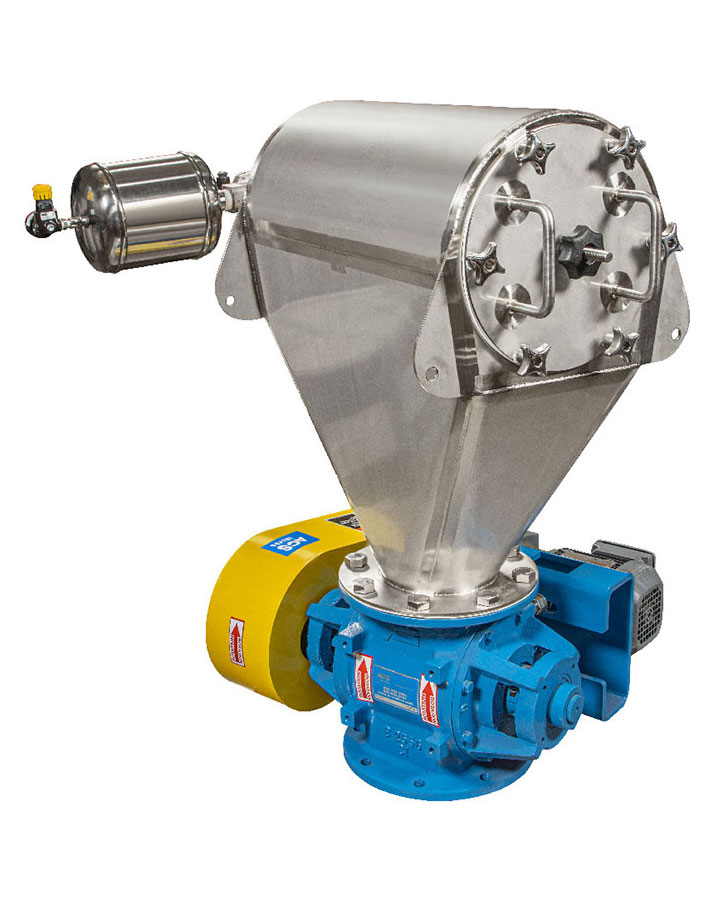
Rotary Valve
Continuously meters material from the receiver while maintaining the vacuum needed for conveying.
Best For
Continuous material flow and higher conveying rates
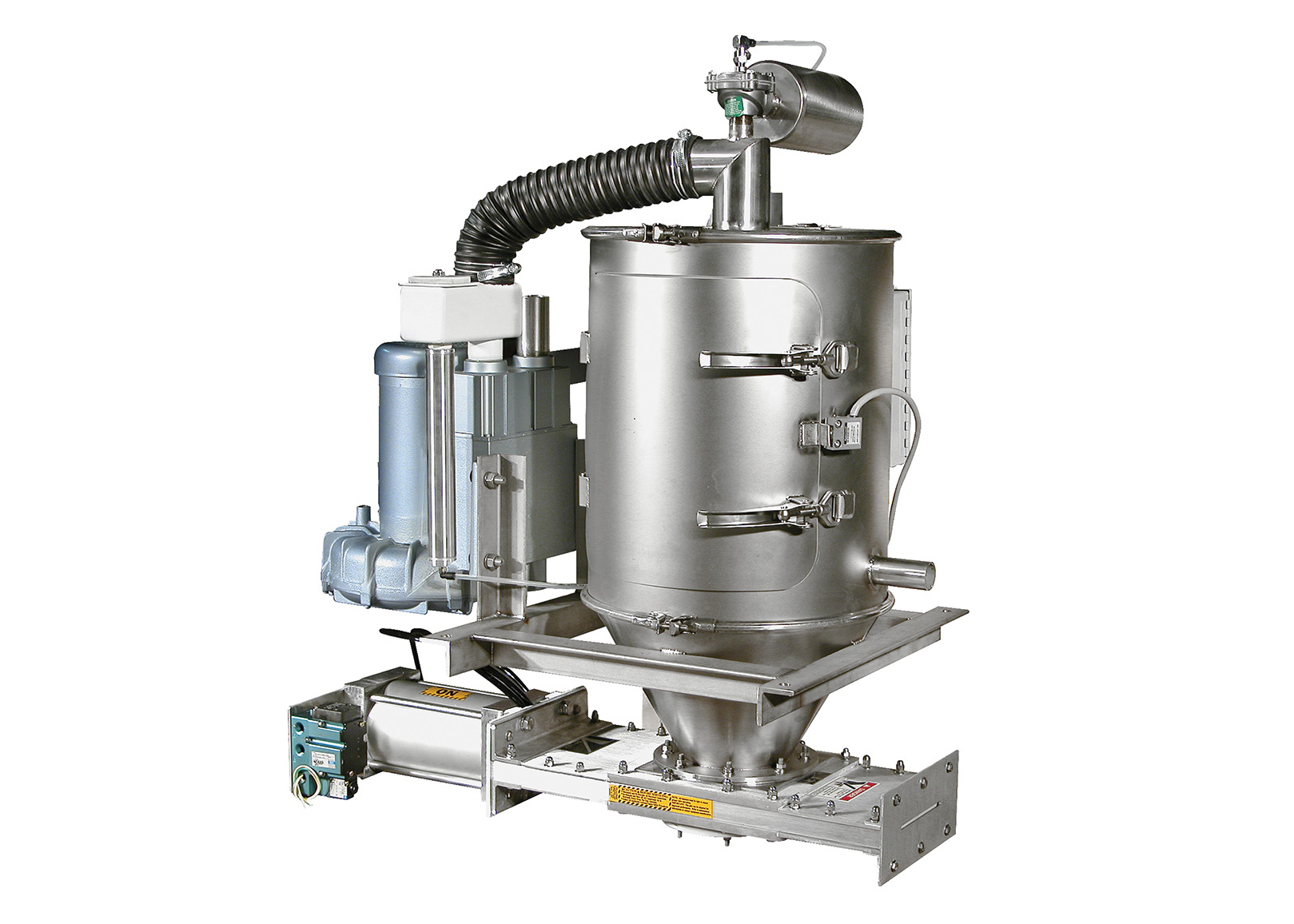
Slide Gate
Opens to quickly discharge collected material; commonly used when refilling feeders or where vertical space is limited.
Best For
Quick discharge or limited headroom
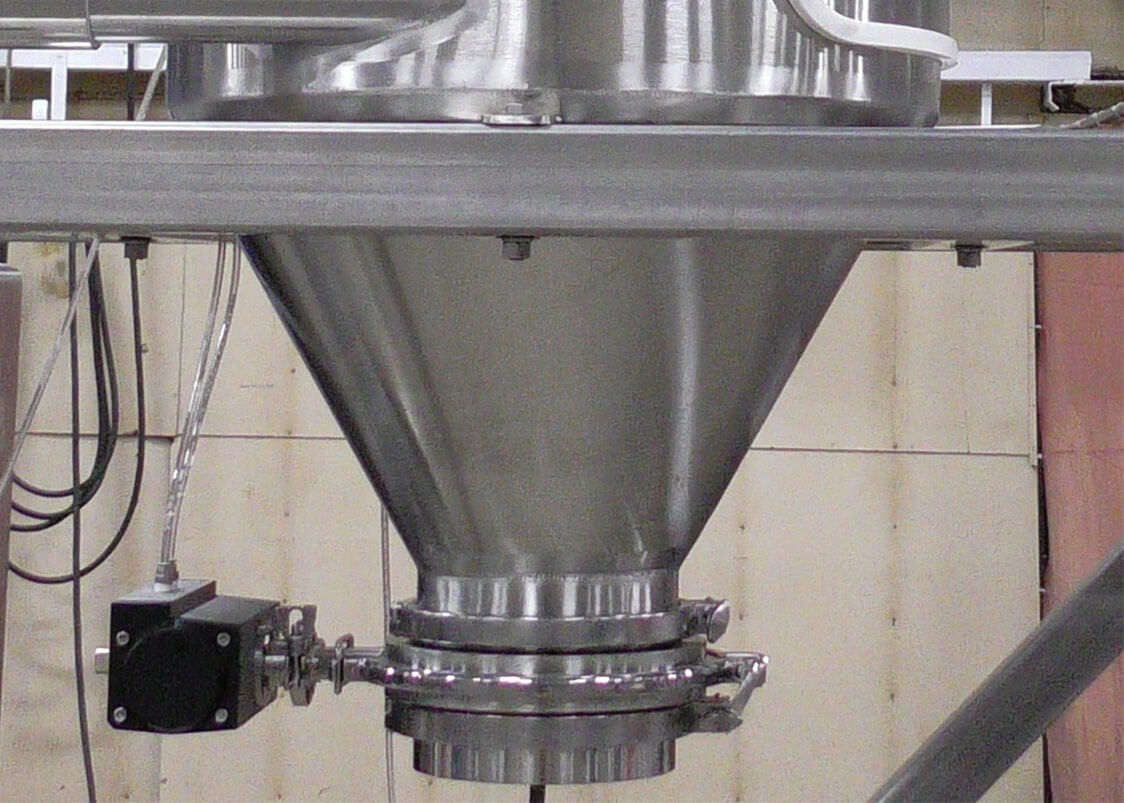
Butterfly Valve
Opens to quickly discharge collected material; commonly used when refilling feeders or where vertical space is limited.
Best For
Intermittent material transfer
Case Studies
Industries
Hapman’s engineering team has helped customers with vacuum conveying applications in the following industries:
Chemical & Pharma
Food Industry
Polymers & Plastics
Vivarium Research
Building Products
Mining & Minerals
Power Generation
Wastewater Treatment
Battery Material Handling
Pet Food

Vacuum Conveyor Configurator
Use the Hapman Configurator for on-demand access to design custom solutions for your application and immediately obtain reference models and drawings.
Get Started with MiniVac
Want to see why MiniVac is the best fit for your product? We can also run sample conveying tests on certain materials. Get in touch with our team to customize your specs to exactly what you need.
Want to talk to a technical specialist about your specs for vacuum conveying systems?

Looking for an alternative to dilute-phase conveying?
Looking for an alternative to dilute-phase conveying? Explore the IntegriVac semi-dense phase conveying system.
You’ve got questions? We’ve got answers! Check out our FAQs.
-
How does a vacuum conveyor work?
A vacuum conveyor uses negative air pressure to pull material through an enclosed conveying line. Material travels in the airstream to the filter/receiver, where it is separated from the conveying air and collected for discharge. The MiniVac operates as a dilute-phase pneumatic conveying system.
-
What materials can a vacuum conveyor handle?
Vacuum conveyors are well suited for dry, free-flowing powders, granular materials, and small pellets. For the MiniVac, powders should generally be larger than 5 microns. Very light or heavy materials, particles larger than 1/4 inch, cohesive or wet materials, fibers, and friable materials may require special consideration or a different conveying method.
-
How far can a vacuum conveyor convey material?
MiniVac vacuum conveyors can convey material distances up to 100 feet with no more than four elbows. Actual conveying distance depends on the material characteristics, required conveying rate, and system layout.
-
What conveying rates can a vacuum conveyor handle?
MiniVac vacuum conveyors can handle conveying rates up to 10,000 pounds per hour. Actual capacity depends on factors including material bulk density, material characteristics, conveying distance, and system configuration.
-
What is the difference between vacuum conveying and pneumatic conveying?
Vacuum conveying is a type of pneumatic conveying. Pneumatic conveying uses airflow to move dry bulk material through an enclosed conveying line. A vacuum conveying system operates under negative pressure, pulling material from the pickup point toward the receiving equipment.
-
Does a vacuum conveyor require compressed air?
The MiniVac uses an integral regenerative blower to generate the vacuum needed for conveying, eliminating the need for plant air or a separate compressor for material conveyance. Compressed air may still be required for other system functions, depending on the configuration.