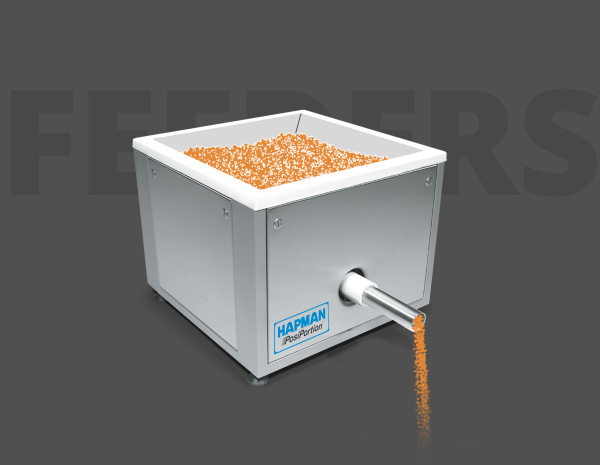
Seasoner Nozzles
Distributes seasonings or other metered ingredients across a product stream for more consistent coverage.
A screw feeder meters dry bulk materials at a controlled, repeatable rate for continuous feeding or batching applications. Volumetric and gravimetric configurations provide the level of material control needed to support consistent downstream processing.
Hapman feeders are configured around your material and process requirements. Screw design, agitation, hopper configuration, weighing, and controls can be selected to support material flow and the required level of feeding control.
Feeders can operate independently or integrate with upstream and downstream equipment for a coordinated material handling process.
Integrate the feeder with other bulk material equipment from Hapman like the Bulk Bag Unloader, Bag Dump Stations, or Helix® Flexible Screw Conveyor, for a complete conveying system.
Our Performantee is a 100% operational guarantee that you will be fully satisfied with the performance of our equipment, and that it will achieve the specific results for which it was designed and manufactured. If not, we will revise or repair it to deliver the results we promised.

Hapman feeders are configured around your material and dosing requirements, with components designed to support consistent material flow, accurate feeding, and easier maintenance.
Screw
Multiple screw designs and configurations accommodate different material characteristics and feed rates for controlled, consistent dosing.
HOPPER
Hopper configurations support consistent material flow, with agitation available to help prevent bridging and material buildup.
MAINTENANCE
Acme-threaded connection allows quick dosing screw removal for easier cleaning and inspection.
drive
Single or dual drives accommodate different feeding requirements, with dual drives providing independent agitation control for gravimetric applications.
integration
Feeders can operate independently or integrate with Hapman conveying, unloading, and other process equipment for coordinated material handling.
These ranges provide a starting point for feeder selection. Actual performance depends on material characteristics and equipment configuration.
FEED Rate
0.024–480 ft³/hr
BULK DENSITY
Up to 200 lb/ft³
CHASSIS
16″, 24″, 32″
SCREW
Up to 6″
HOPPER
Up to 16 ft³
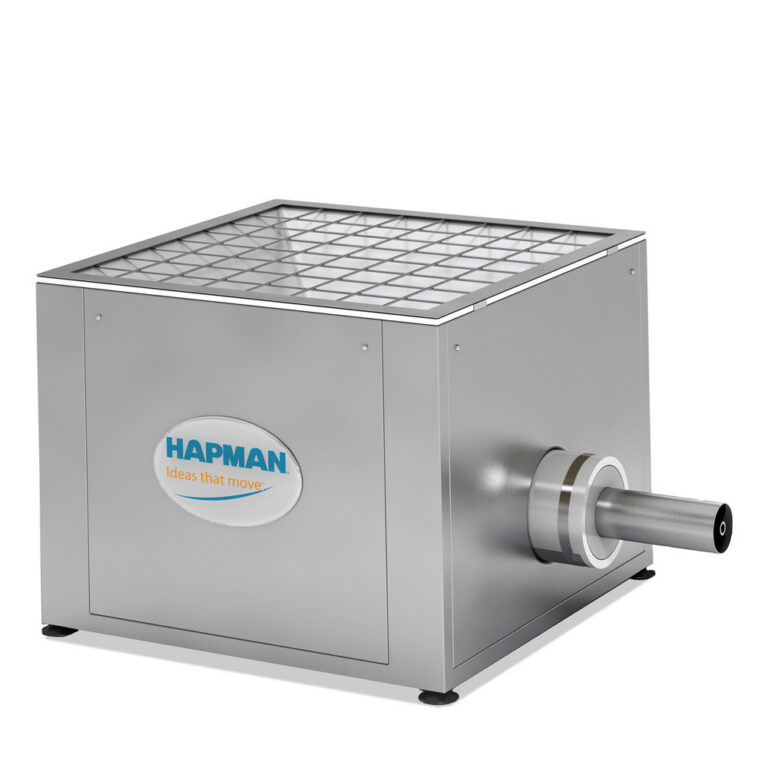
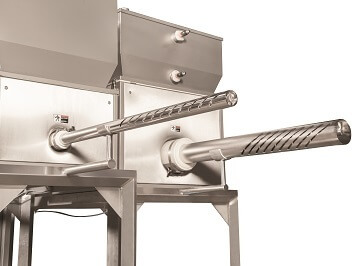
Distributes seasonings or other metered ingredients across a product stream for more consistent coverage.

Directs metered material into a port, funnel, or downstream equipment.
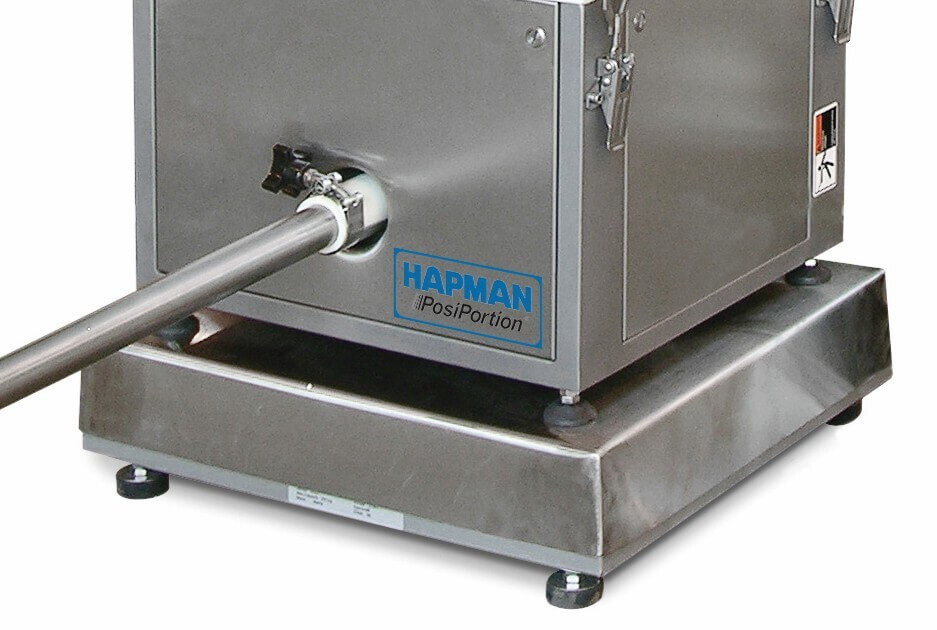
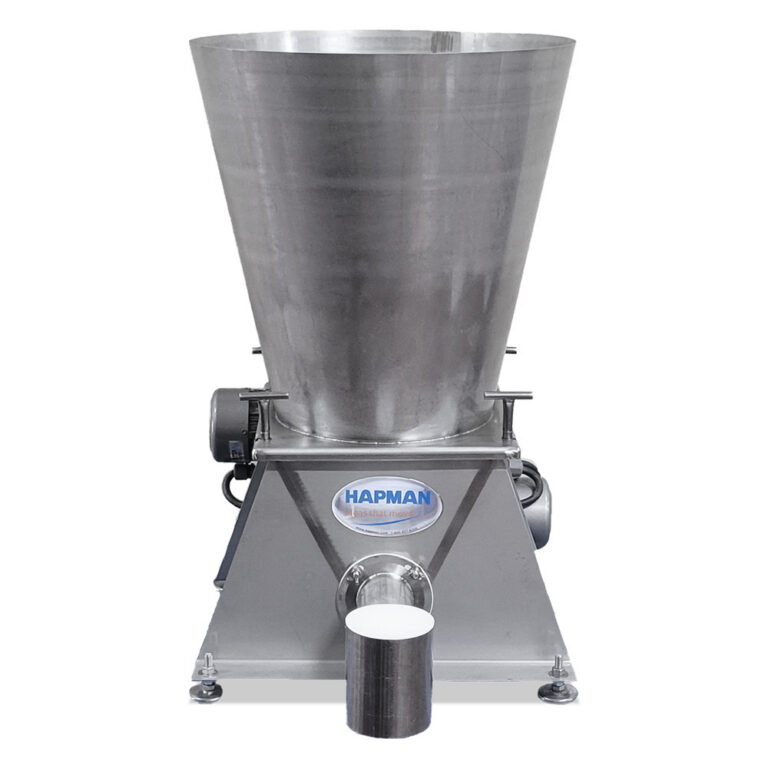
Enables weight-based gravimetric feeding when greater dosing control and measurement are required. Available scale configurations provide accuracy from 0.02 lb to 0.2 lb, depending on load-cell capacity and scale configuration.
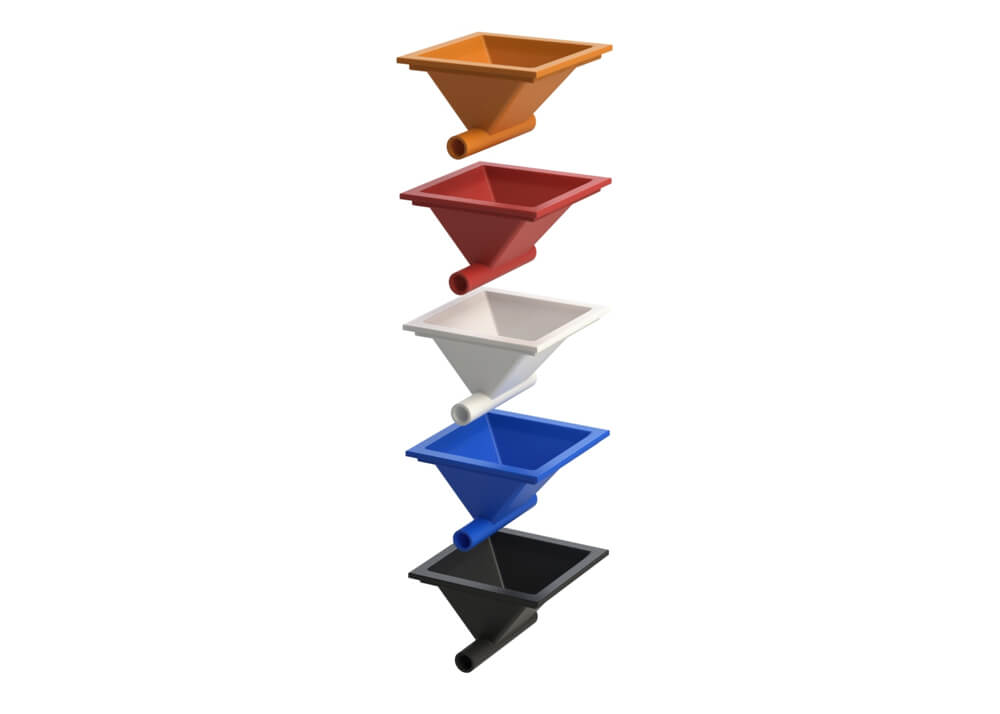
Matches the PosiPortion hopper to application requirements such as food-grade, anti-static, chemical-resistant, high-temperature, or abrasive applications.
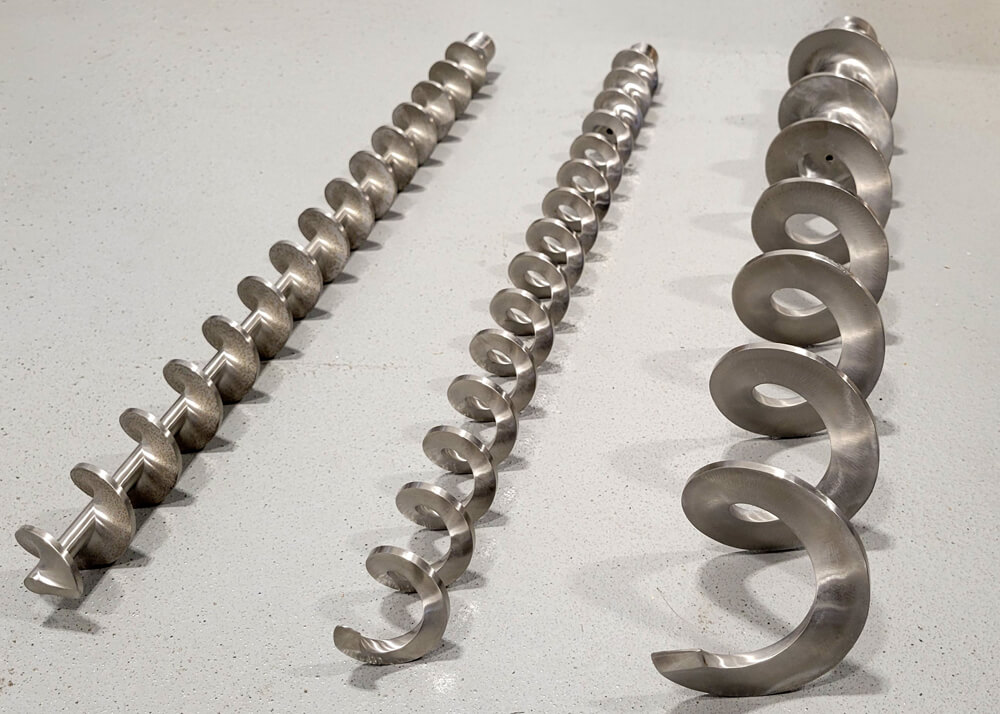
Reduces material adhesion to the dosing screw when handling sticky or difficult-to-flow materials.
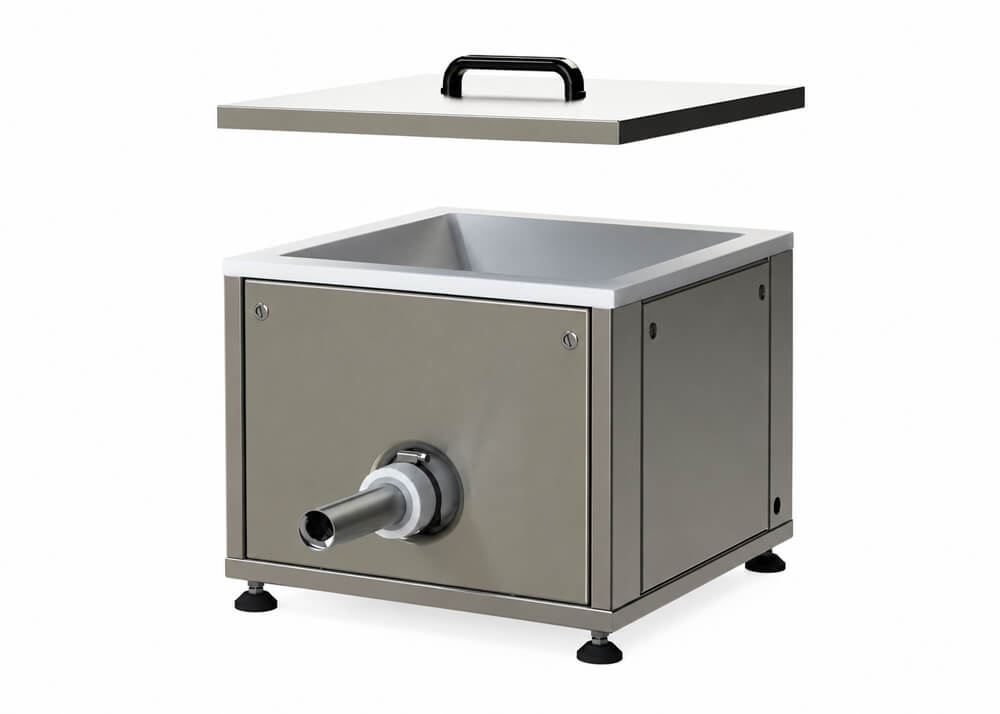
Helps protect material in the hopper from foreign material and environmental contaminants. Available with a handle for manual access or inlet tubes for connection to upstream equipment.
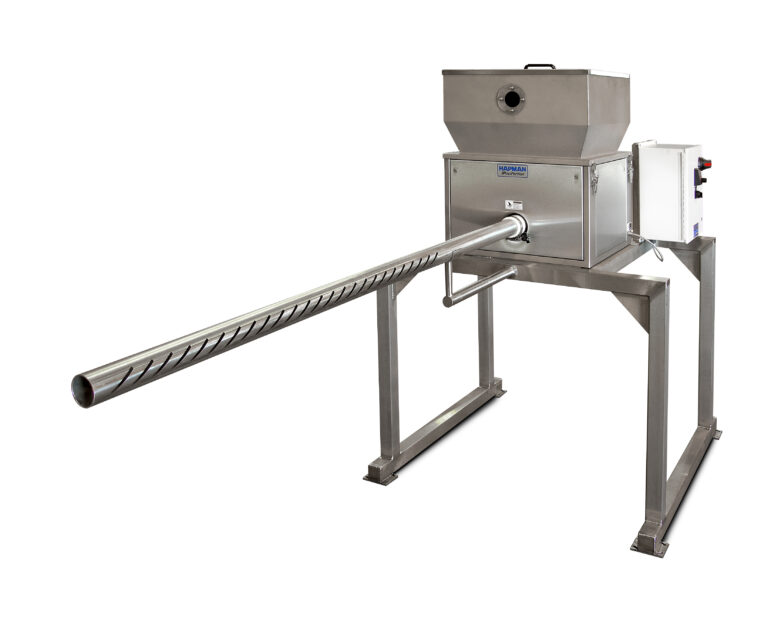
Hapman’s engineering team has helped customers with Volumetric & Gravimetric Feeder applications in the following industries:
Want to see why a screw feeder is the best fit for your product? We can also run sample conveying tests on certain materials. Get in touch with our team to customize your specs to exactly what you need.
Want to talk to a technical specialist about your specs for Volumetric & Gravimetric Feeders?

Breven Brill
Technical Sales Specialist
269-382-8219
Check out our specs for the Helix® flexible screw conveyor.
What is a feeder?
A feeder provides a controlled, measured flow of bulk material into a process. Unlike a conveyor, which is primarily designed to move material from one location to another, a feeder is designed to regulate the rate or quantity of material being delivered. Feeders may operate volumetrically or gravimetrically depending on the accuracy and process requirements.
What types of materials can screw feeders handle?
Screw feeders can handle a wide range of dry bulk materials, from fine powders to granules and larger particles. Screw design and feeder configuration are selected based on material characteristics such as bulk density, flowability, and abrasiveness. Hapman feeders are designed for dry bulk materials and are not suitable for wet materials or liquids.
What is the difference between the PosiPortion and PosiPro feeders?
Both feeders provide controlled feeding of dry bulk materials, but they are designed for different application needs. The PosiPortion uses an externally agitated flexible hopper and is well suited for food, pharmaceutical, and nutraceutical applications. The PosiPro uses a rigid, all-metal hopper and can incorporate internal agitation for more difficult-flowing materials and demanding operating conditions.
Hapman can help determine which design is best suited to your material, environment, and required feed rate.
What is the difference between volumetric and gravimetric feeding?
Volumetric feeding controls material delivery based on volume, typically by maintaining a set screw speed. It is well suited for applications where material characteristics remain relatively consistent and feed-rate verification by weight is not required.
Gravimetric feeding measures material by weight. A gross amount of material is held in the feeder and extension hopper. A set amount of material is dosed based on a loss of weight from the feeder. Once weight of the unit gets to a low setpoint the controls calls for a refill, the process refills the feeder and the batch can be performed again.
The appropriate method depends on the material, required feed rate, accuracy requirements, and overall process controls.
How accurate is a screw feeder?
Screw feeder accuracy depends on the material, feed rate, feeder configuration, and weighing system. Gravimetric configurations use a scale for weight-based feeding, while options such as a pneumatic T-nozzle can help prevent material dribble at the discharge, providing greater control when higher accuracy is required. Application testing can help determine the appropriate configuration for a specific material and accuracy requirement.
Can screw feeders handle difficult-flowing materials?
Yes, but the feeder configuration must account for the material’s flow characteristics. Cohesive materials and powders prone to bridging, packing, or agglomeration may require hopper agitation or other flow-assistance features to maintain consistent material movement into the screw. The PosiPortion and PosiPro use different agitation approaches to accommodate varying material and application requirements.