Traversing Fill Head and Loop Hooks
Brings the fill head and bag-loop attachment points forward to the operator, making it easier to connect the bag spout and loops before filling.
Available on HD
Bulk bag fillers, also known as a bulk bag loader, provide the support and control needed for safe, consistent filling of bulk bags, commonly called FIBCs. By securely positioning the bag and managing material flow during filling, they help achieve accurate fill weights, improve bag stability, reduce product waste, and simplify handling for operators. Properly filled, stable bags can also use warehouse and transportation space more efficiently, helping reduce storage and shipping costs.
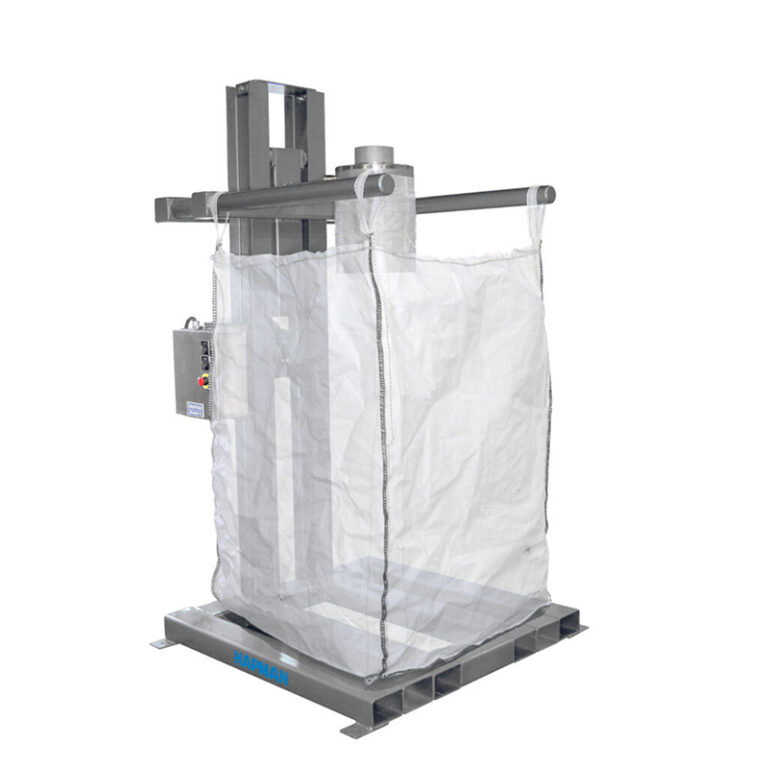
Hapman Bulk Bag Fillers are designed to accommodate a wide range of bag sizes, material characteristics, and production requirements. From straightforward filling operations to systems with integrated weighing, densification, and automated bag handling, each configuration is engineered around your application. Options for dust containment, bag positioning, and conveying integration help create an efficient filling operation.
Integrate the Bulk Bag Filler with other bulk material equipment from Hapman like the Bulk Bag Unloader, Helix® Flexible Screw Conveyor, or TubePro® for a complete conveying system.
Our Performantee is a 100% operational guarantee that you will be fully satisfied with the performance of our equipment, and that it will achieve the specific results for which it was designed and manufactured. If not, we will revise or repair it to deliver the results we promised.

Every filler is configured around your bags, your material, and your plant, handling a wide range of bulk bag sizes and loads up to 2 tons.
Frame
Available in stainless steel or carbon steel.
Finish
Bare stainless, or epoxy, Steel-It™, or enamel paint.
Bladder
Expands to create a dust-tight seal around the bag spout during filling, with a 2″ dust vent connection.
Height
Customized to accommodate your bag dimensions and facility requirements.
Fill Head
12″ diameter when deflated.
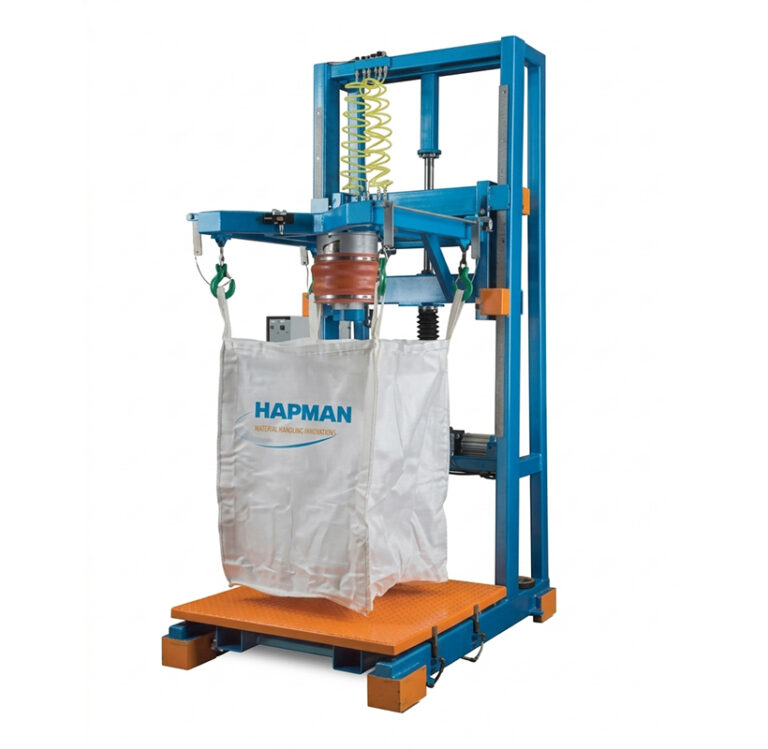
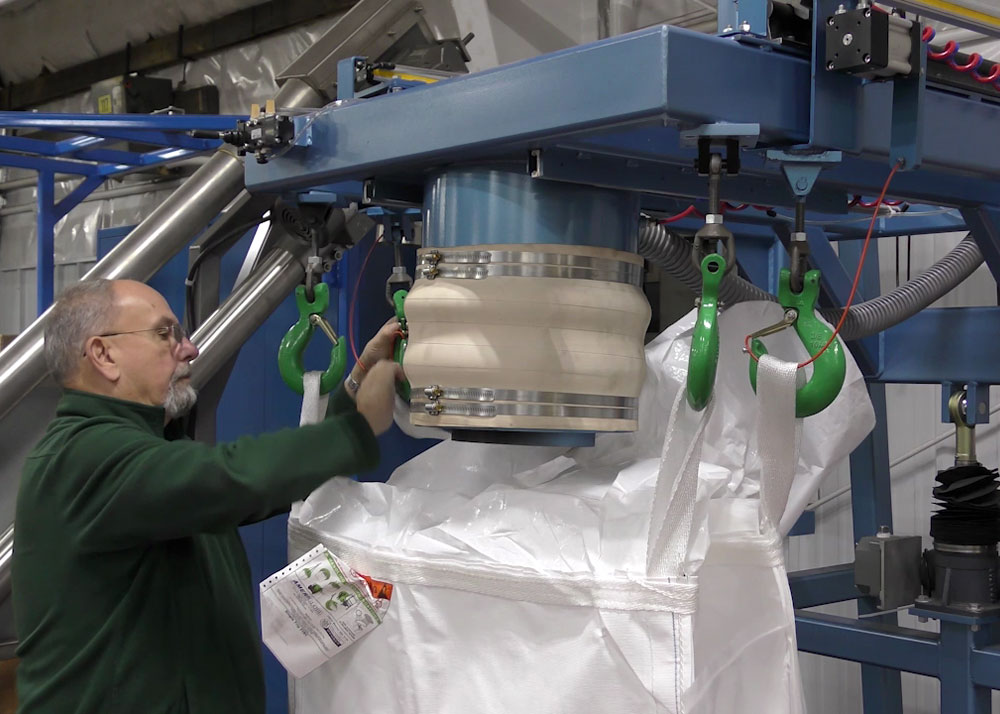
Brings the fill head and bag-loop attachment points forward to the operator, making it easier to connect the bag spout and loops before filling.
Available on HD

Pre-inflates the empty bulk bag to remove folds and creases, helping the bag fully expand before material enters and maximizing usable bag capacity.
Available on NT & HD

Moves filled bags away from the filling position to support higher-throughput and more continuous filling operations.
Available on HD

Gently vibrates the bag as it fills to settle material, promote a fuller square-bottom shape, and improve the stability of the filled bag.
Available on NT & HD

Configures the filling system to accommodate drums in addition to bulk bags, providing flexibility for operations that fill multiple container types.
Available on NT & HD

Uses four frame-mounted load cells to continuously measure the weight of material entering the bag for accurate filling to a target weight.
Available on NT & HD

Weighs the bag from the suspension points for accurate hang weighing and allows the filler to be relocated without requiring load-cell recalibration.
Available on HD
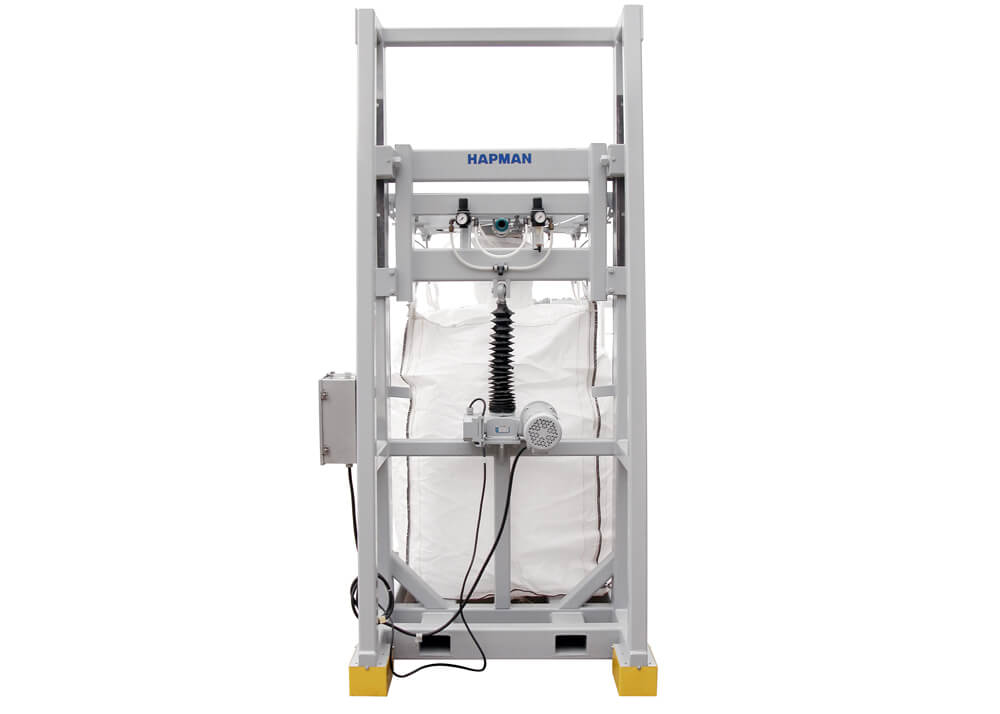
Adjust the filler to accommodate different bulk bag heights with up to 30 inches of vertical travel. Available in manual hand crank or motorized.
Available on HD

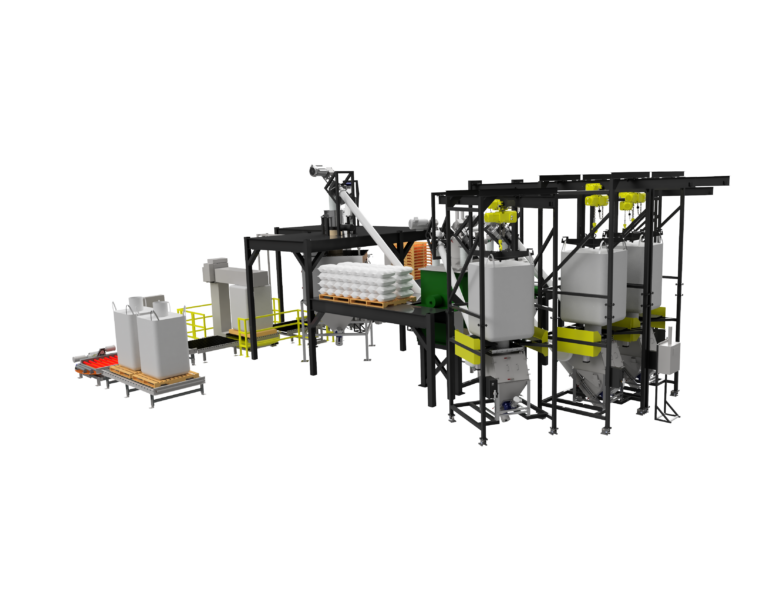
Hapman’s engineering team has helped customers with bag filling applications in the following industries:
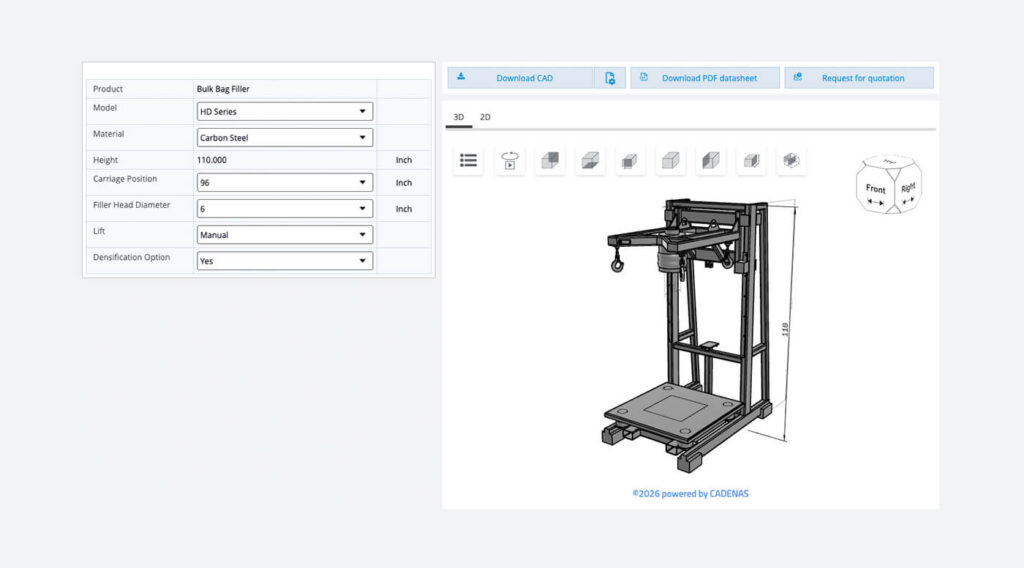
Use the Hapman Configurator for on-demand access to design custom solutions for your application and immediately obtain reference models and drawings.
Want to see why a Bulk Bag Filler is the best fit for your product? We can also run sample conveying tests on certain materials. Get in touch with our team to customize your specs to exactly what you need.
Want to talk to a technical specialist about your specs for bulk bag fillers?


What is a bulk bag filler?
A bulk bag filler, sometimes called a bulk bag filling machine, is equipment used to support and fill bulk bags with powders, granules, pellets, and other dry bulk materials. Depending on the application, a filler can incorporate weighing, bag inflation, densification, dust control, and automated bag handling.
How does a bulk bag filler work?
The empty bulk bag is secured to the filler and positioned beneath the material inlet. Material is then fed into the bag while the filler supports the bag and, depending on the configuration, monitors weight, manages material flow, densifies the product, or assists with bag handling. Once the target fill is reached, the bag is disconnected and removed for storage or transport.
How accurate is a bulk bag filler?
Fill accuracy is determined by the weighing and control system used with the bulk bag filler. Hapman systems use load cells and controls to monitor bag weight and manage material flow from upstream equipment, with configurations capable of achieving approximately ±10 lb. to ±1% or better, depending on the application
What size bulk bags can a Hapman Bulk Bag Filler handle?
Hapman Bulk Bag Fillers accommodate bulk bags ranging from 35″ x 35″ x 36″ tall to 48″ x 48″ x 96″ tall. Custom designs are available for applications requiring bag sizes outside this standard range.
Can a bulk bag filler help reduce dust during filling?
Yes. Bulk bag fillers can be configured with features that help contain dust at the fill point. The appropriate dust-control approach depends on the material, bag design, and filling process.
Can a Bulk Bag Filler be integrated with a conveyor or feeder?
Yes. Bulk bag fillers can be supplied as standalone equipment or integrated with upstream conveying and feeding equipment. Hapman can integrate Bulk Bag Fillers with equipment such as flexible screw, tubular drag, and vacuum conveyors, along with controls for managing material delivery and the filling process.
What information is needed to select a bulk bag filler?
Selecting the right bulk bag filler starts with your material characteristics, bulk density, bag dimensions, target fill weight, required throughput, available space, and desired level of automation. Hapman uses these application details to determine the appropriate filler model and configuration.
